


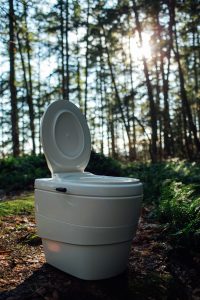
Thinktank waterless Toilet with high capacity.
Comparison of the top 10 Composting Toilets in Canada
There are numerous composting and waterless toilets sold in Canada, and it can be very confusing. There is a table below comparing the differnces among the most popular models.
How Many “Uses”? – Size Matters!
Be a little skeptical about the capacity of some toilets as listed by the manufacturer (listed here where available). In testing we have found toilets that hold far fewer “uses” than advertised. We show capacity of the solid waste container in gallons whenever possible, alongside the estimated number of uses from the manufacturer.
Some of these waterless / composting toilets are very small and suitable for a van, small RV or boat. The larger toilets are more suitable to a cottage, cabin, or tiny home. You can check measurements on the websites for each toilet.
If you have the space, get a full-sized toilet. The increased capacity is worth a small increase in cost.
Less frequent emptying is better!
Where Does the Urine Go??
Most modern composting toilets and waterless toilets are urine diverting. Separating urine from solid waste is a BIG improvement, as the contents are far less offensive, and much esier to deal with.
The smaller toilets may drain urine into a bottle. This might be ideal in a van or RV. However, in a stationary location it’s much more convenient to drain the urine into a drain pit, gray water system, or large tank.

Typical Pee Bottle in small toilet for vans or RVs
The Nitty Gritty Details (not advertised in the marketing brochure!)
Bowl or Chute?
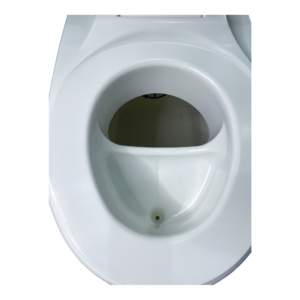
Large chute for soild waste
The solid waste in most waterless toilets falls into a bowl, with a small opening to the lower area. This means that every time someone poops, there is a gross clean up job. Some manufacturers are recommending lining the bowl with a coffee filter basket, or paper towels. Ugh.
Far, far better is a toilet with a large opening for the solid waste, with vertical walls. This means little to no clean up is required after each use.
Construction / Sturdiness
There are other differences that were impossible to list in the table below, and are essential for a valid composting toilet comparison. For example, the general construction of some toilets is far superior to others. Not to get too technical, but most toilets are very lightly and cheaply made. A small number are rotationally molded – which is how a white water kayak or Yeti cooler is made. It’s the best, the most expensive (for the manufacturer) and hardest way to make a toilet.
Some toilets use ridiculous plastic hinges on the toilet lid and seat that will most certainly break over time, while others use 1/4″ stainless steel pins.
All composting and waterless toilets have a few metal parts – such as pins, screws, bolts, springs, etc. Most use mild steel, which will eventually rust in a moist bathroom environment. A small number of toilets use marine grade stainless steel, which is a far better choice. Toilets using marine grade stainless steel parts include the Thinktank, Nature’s Head, and Airhead.
Fans and Ventilation
It is astonishing to us, but some of the less expensive toilets do not have fans or an exhaust of any kind. There is poop inside these toilets! It will really stink in there! Without good airflow and ventilation odor will eventually esacpe into the bathroom. You may get mold inside the toilet (a common complaint, if you research online).
It has been suggested that these unventilated toilets will not stink if you bury the aste under sawdust after each use. That’s messy, and will take up a lot of room inside the toilet, meaning more frequent emptying. It’s a poor solution, suitable for weekend camping toilets only.
Some toilets do have ventilation, but use very small, inexpensive fans – while others use larger, high quality fans. The difference is very significant in terms of how quiet they are, how much air they blow, the static pressure (force behind the air), and how long they last. Quality matters.

Notice the large, high quality ventilation fan on the right.
There is a toilet on the market that does not include a vent hose or pipe, and the European (metric) size of the outlet means a hose or pipe is almost impossible to find in the US. (People are forced to use a hose that is too big, and wrap the connection with tape!).
Fans need a power supply. They typically use very little power – about 1 -2 watts. Some composting toilets include a wall transformer, which is necessary if you want to plug into a wall outlet. Others charge up to $50 for it. You may wish to power your toilet with a 12 volt battery. Be sure it comes with the necessary wiring!
Ventilation is critical and often overlooked. It should be part of any composting toilet comparison.
Can it Be Repaired?
Some toilets seem to be designed to be difficult (and costly) to repair, while other have ease of repair designed in. There are actually toilets available where the fan is sealed in an expensive fan housing. You have to buy the entire housing – not just the fan! It’s very expensive and can only be purchased from the manufacturer.
Easy Empty or Gross?

Make sure any toilet you are considering is not gross to empty. This toilet uses a compostable bag to contain the waste. Wood shavings are put down the hatch prior to emptying. Perfect!
Make sure any toilet you are considering is not gross to empty. Some toilets are much better than others in this regards. The goal is to minimize exposure to human waste.
Is the waste concealed?
Often overlooked by people new to composting toilets is the trap door or view screen. This serves the vital purpose of concealing the waste unless going #2. Without a view screen, you are staring at the last person’s poop every time you open the lid to take a pee. Ugh. No.
It’s hard to quantify these things in a table. To accurately and fully conduct a composting toilet comparison, I suggest calling a dealer or distributor for any toilet you are considering, and ask them about these important things.
Hopefully this will provide a good starting point for a composting toilet comparison. You can use the table below to assess the features and benefits of the most common brands. We are always available if you have additional questions about a composting toilet comparison you may be wondering about. Call toll free and talk to a REAL PERSON at 1 888 361 0014.
Note: All these prices are in Canadian dollars.
| Price (Including shipping in the lower 48 states) | Men Can Stand | Airtight with Air Intake | Warranty | Capacity (estimated solid uses) | Fan and Vent | Trap Door to Conceal Waste | Rotating waste container to distribute contents and maximize capacity | Trap Door to Conceal Waste | |
|---|---|---|---|---|---|---|---|---|---|
| Thinktank | $1499 | Yes | Yes | 6 years | 50-60 uses (7 gallons) | Yes | Yes | Yes | Yes |
| Separett Villa 9210 | $1499 | No | No | 5 years | 50-60 uses (7 gallons) | Yes | Yes | Yes | Yes |
| Separett Tiny | $1519 | No | No | 5 years | 15 uses | Yes | Yes | No | Yes |
| Nature's Head | $1499 | No | No | 5 years | 50 uses (5 gallons) | Yes | Yes | NA | Yes |
| Airhead | $1924.00 | No | No | 5 years | 50 uses (5 gallons) | Yes | Yes | NA | Yes |
| Ogo | $1699.99 | No | No | 5 years | 30 uses (5 gallons) | Yes | Yes | NA | Yes |
| Cuddy | $1060.00 | No | No | 2 years | 15-20 uses | Yes | Yes | No | Yes |
| Boxio | $356.00 | No | No | 1 year | 8-10 uses | No | No | No | No |
| Trelino | $550 (basic model) | No | No | 2 years | 6-8 uses | No | No | No | Yes |
| Joolca (camping toilet) | $329 | No | No | 2 years | 19 uses (2.9 gallons) | No | Yes | Bowl | No |